







JRCS attended the unveiling ceremony for the “TEN-OH,” Japan’s first hydrogen co-firing engine tugboat.
JRCS attended the unveiling ceremony on January 14 for the hydrogen co-firing engine-equipped tugboat “TEN-OH,” which was completed in October 2025.
The “TEN-OH” was built as a demonstration vessel for the Japan Foundation’s Zero Emission Ship Project and is Japan’s first tugboat equipped with a hydrogen co-firing medium-speed engine. In December 2025, the “TEN-OH” achieved the world’s first successful demonstration of zero-carbon navigation using a combination of hydrogen and biodiesel fuel (B100). This is being hailed as a major achievement toward decarbonizing port operations.
This demonstration confirmed that blending hydrogen with heavy fuel oil A for combustion reduced CO2 emissions by approximately 60 percent compared to burning heavy fuel oil A alone. This achievement demonstrates that hydrogen can supply approximately 60 percent of the energy required by the engine during operation. It represents a significant milestone, proving that substantial emission reductions are possible while maintaining operational performance for vessel types requiring high power, such as tugboats. During sea trials, no significant differences were observed in speed, maneuverability, or towing capacity compared to operation using heavy oil alone, confirming its practical effectiveness.
The construction of this vessel and the development of the hydrogen co-firing engine are being spearheaded by Japan Hydro Corporation, a core company in the Zero Emission Ship Project, significantly contributing to the establishment of hydrogen engine technology in Japan. As a participant in the project, JRCS is supplying the “Hydrogen Control Panel,” which provides integrated control and monitoring of hydrogen supply and storage equipment, playing a role in supporting safe and stable hydrogen co-firing operations.
The hydrogen control panel provided by JRCS functions as a core device ensuring the advanced safety required for hydrogen co-firing operations, including automatic switching between supply and filling modes, automated control of remote valves, and safety control via interlocks. It possesses the reliability essential for the practical implementation of zero-emission ships, such as automatically halting hydrogen supply and switching to heavy oil-only mode when abnormalities occur.
The project will accelerate development toward realizing fully zero-emission vessels, with the completion of a car ferry equipped with a hydrogen-only medium-speed engine scheduled for fiscal year 2026. Additionally, efforts are underway to establish offshore hydrogen stations and demonstrate inland tankers equipped with hydrogen-powered high-speed engines. Initiatives will expand step by step in accordance with the roadmap: full-scale practical application of hydrogen-fueled ships by 2030 and achieving zero emissions for inland vessels by 2050.
The adoption of new fuels, including hydrogen, is a key theme for decarbonizing the shipping industry. JRCS will continue to actively participate in the development and demonstration of zero-emission ships, supporting technological innovation to realize a sustainable maritime industry.
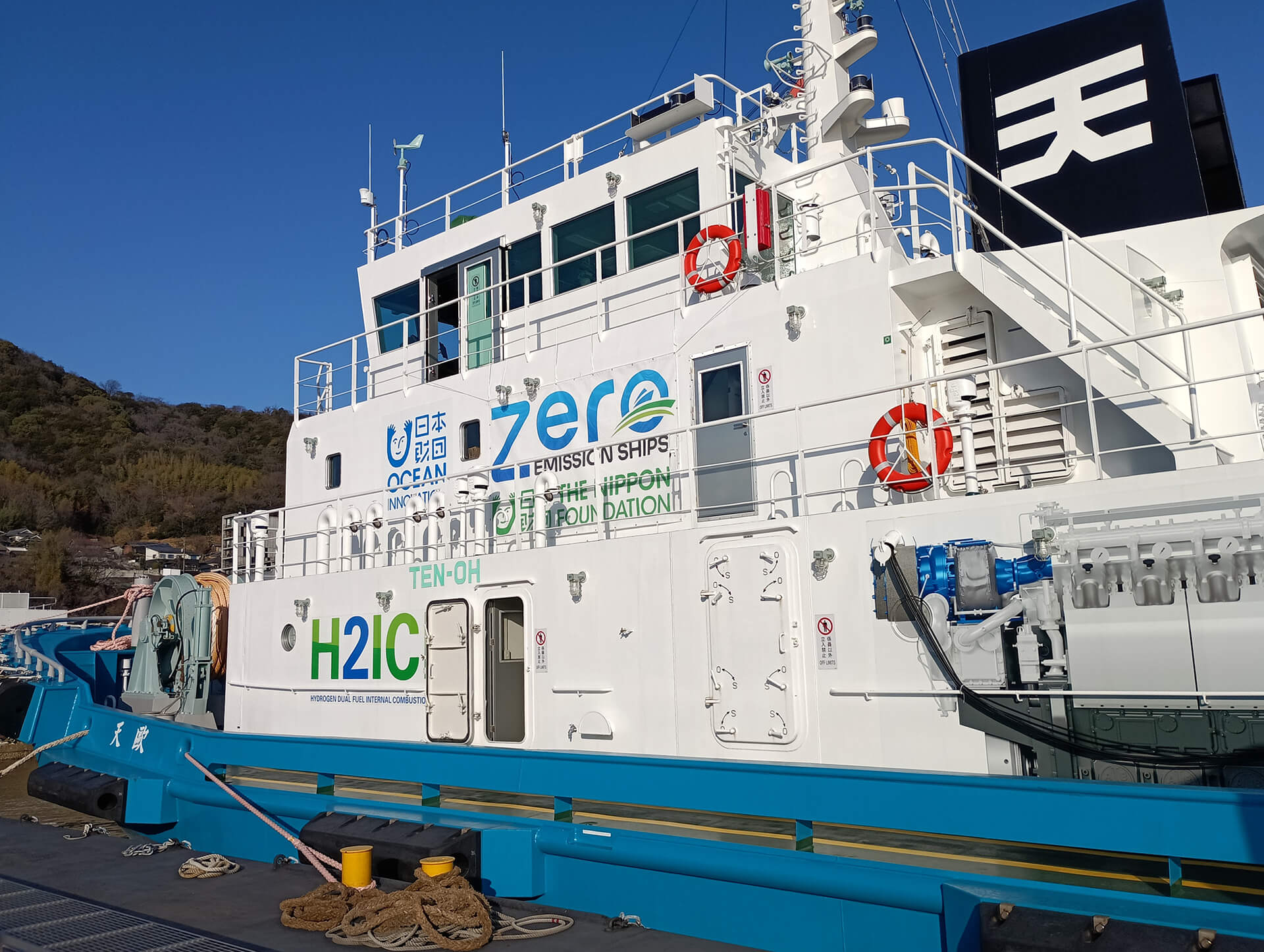
The hydrogen co-firing engine-equipped tugboat “TEN-OH” was unveiled.
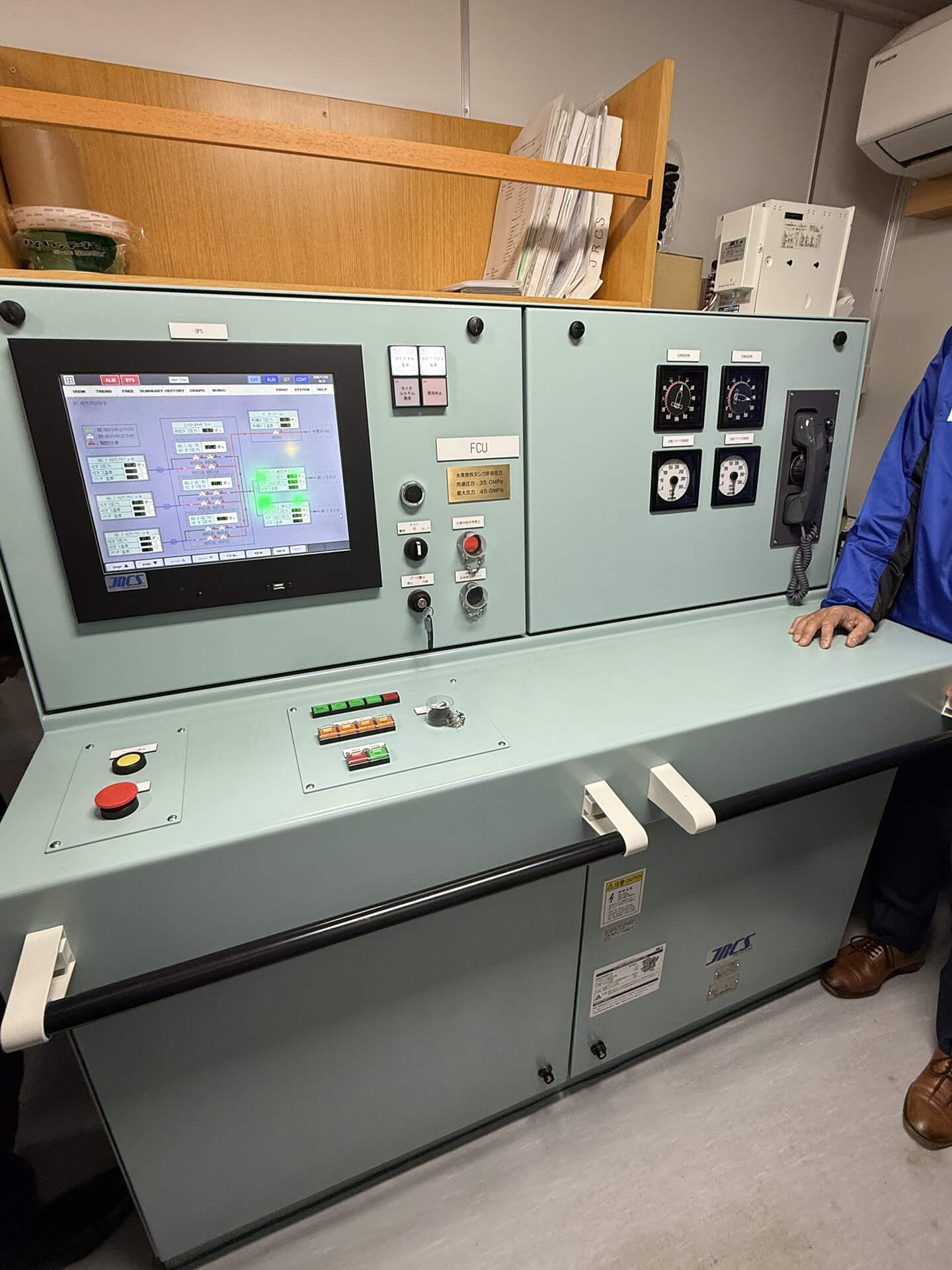
Equipped with a hydrogen control panel manufactured by JRCS
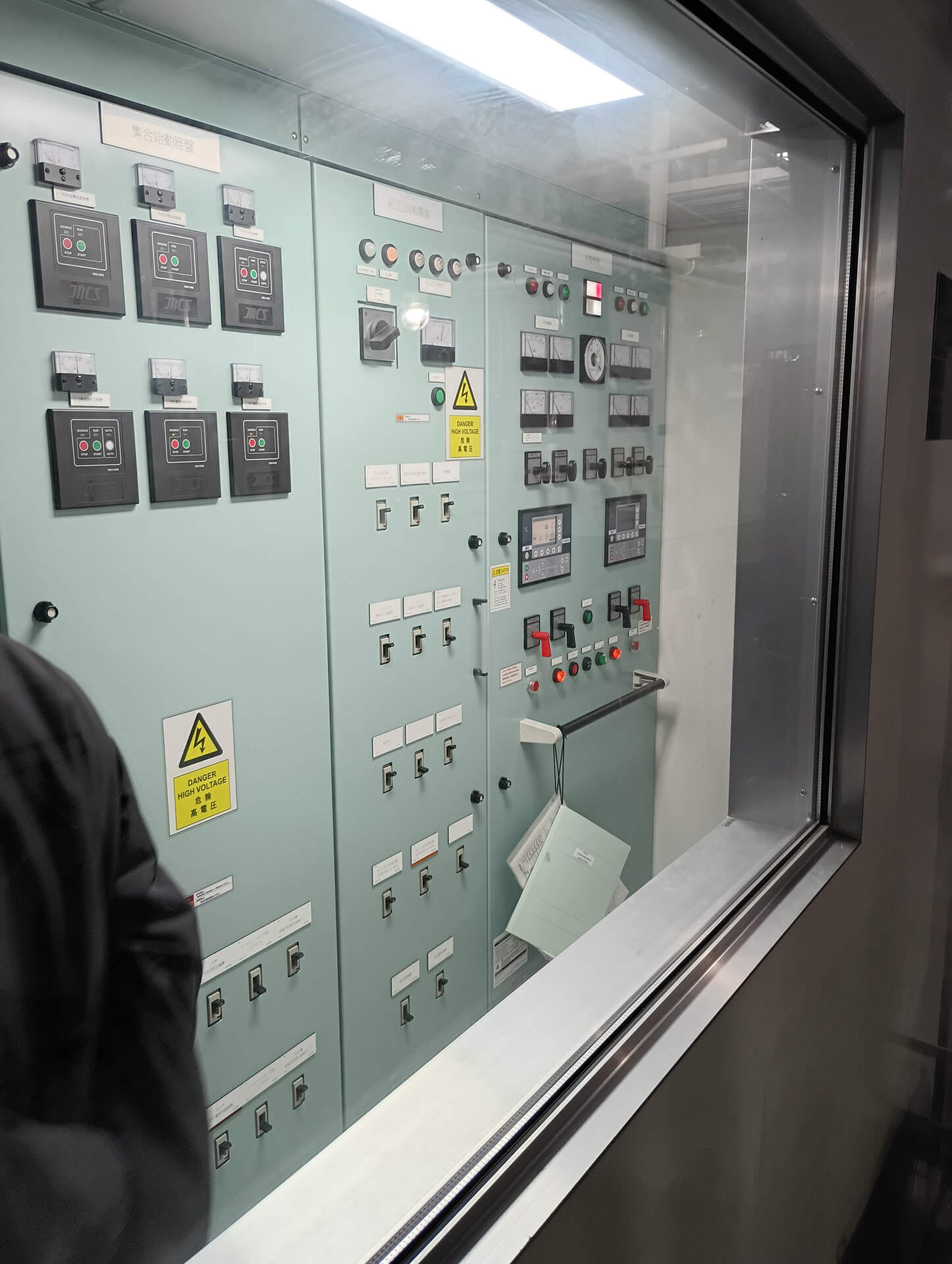
The main switchboard and starter panels are also manufactured by JRCS.